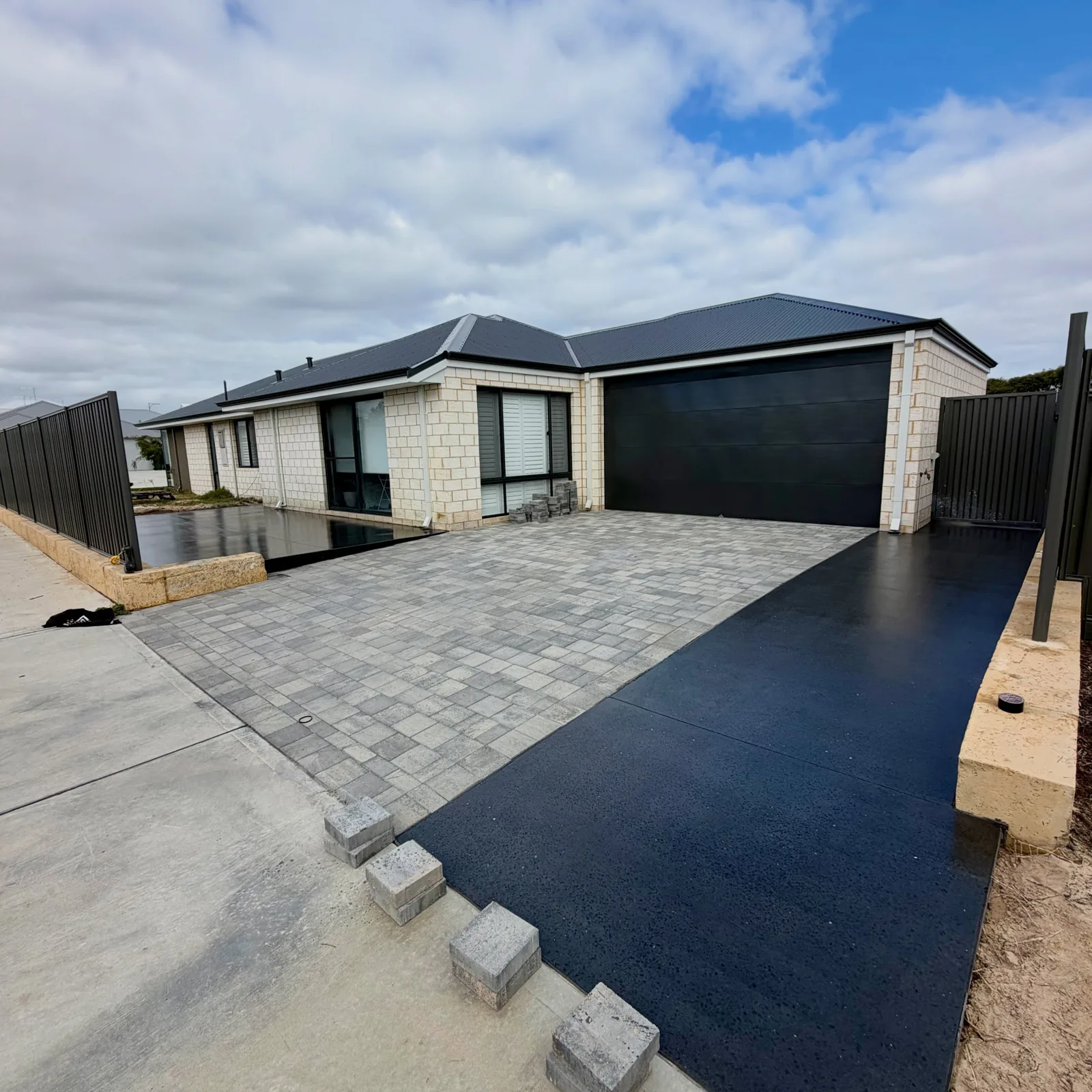
Covered alfresco areas
Honed concrete creates a continuous floor without tile grout lines and can connect sliding doors, dining areas and outdoor kitchens. Levels and drainage still need to be resolved before the pour.
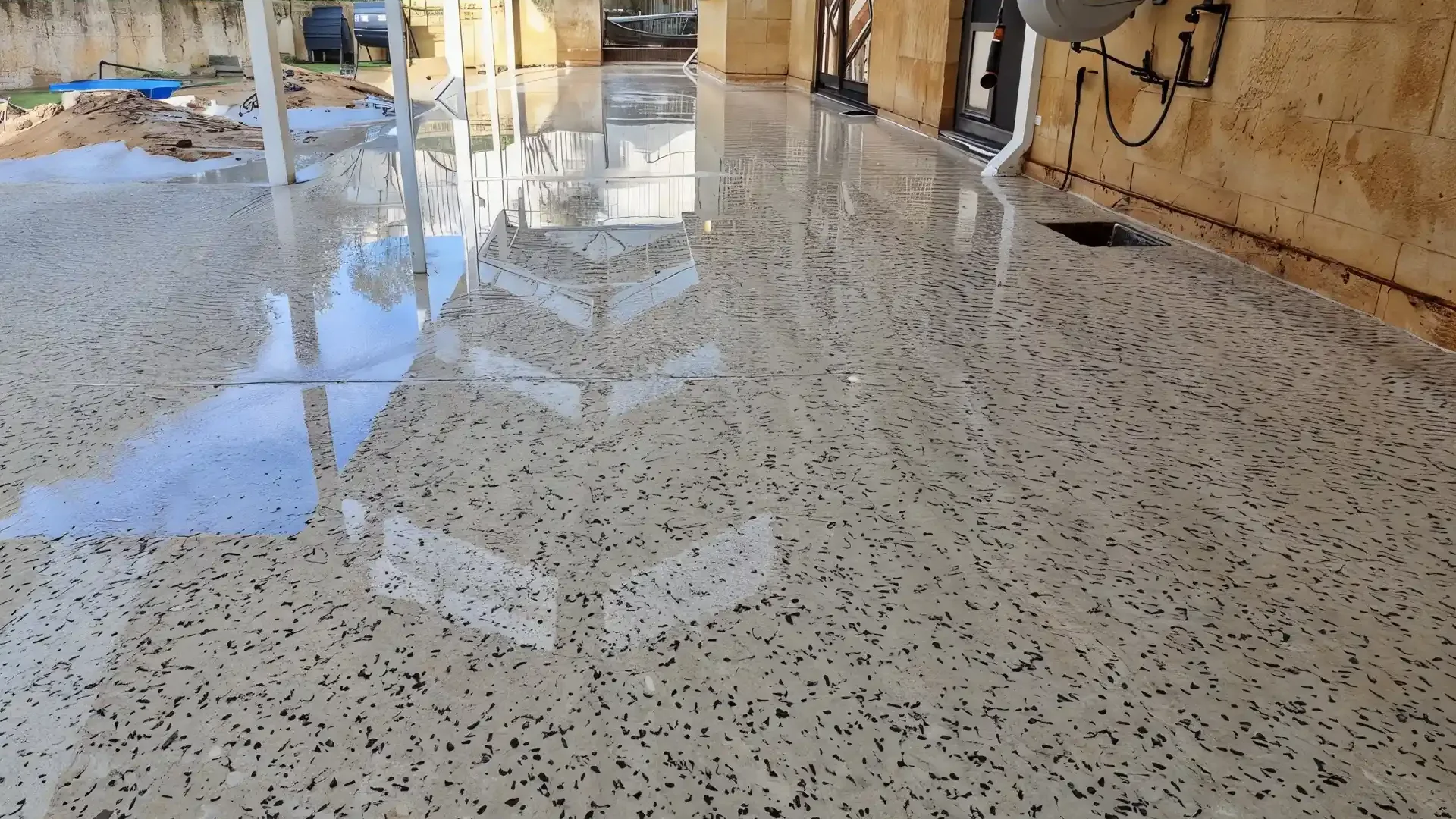
Smooth decorative stone for outdoor living
Honed concrete uses a decorative aggregate mix that is mechanically ground after curing to reveal flat cross-sections of stone. The surface feels smoother than washed exposed aggregate and has a refined, terrazzo-like character without becoming an indoor polished floor. It is most often considered for covered alfresco areas, entries, entertaining zones and pool areas where furniture movement and barefoot comfort are important. The blend, grind depth and protective treatment all influence the final colour, sheen and feel.
Only Concrete has more than 13 years of decorative concreting experience and works across Perth from a Canning Vale base. We plan the slab and finish as one job, rather than treating the grinding as an afterthought. When a site needs more texture, we will recommend exposed aggregate instead, or use different finishes in different zones. That decision should reflect the slope, exposure to water, expected traffic and maintenance expectations, not simply which sample looks best indoors.
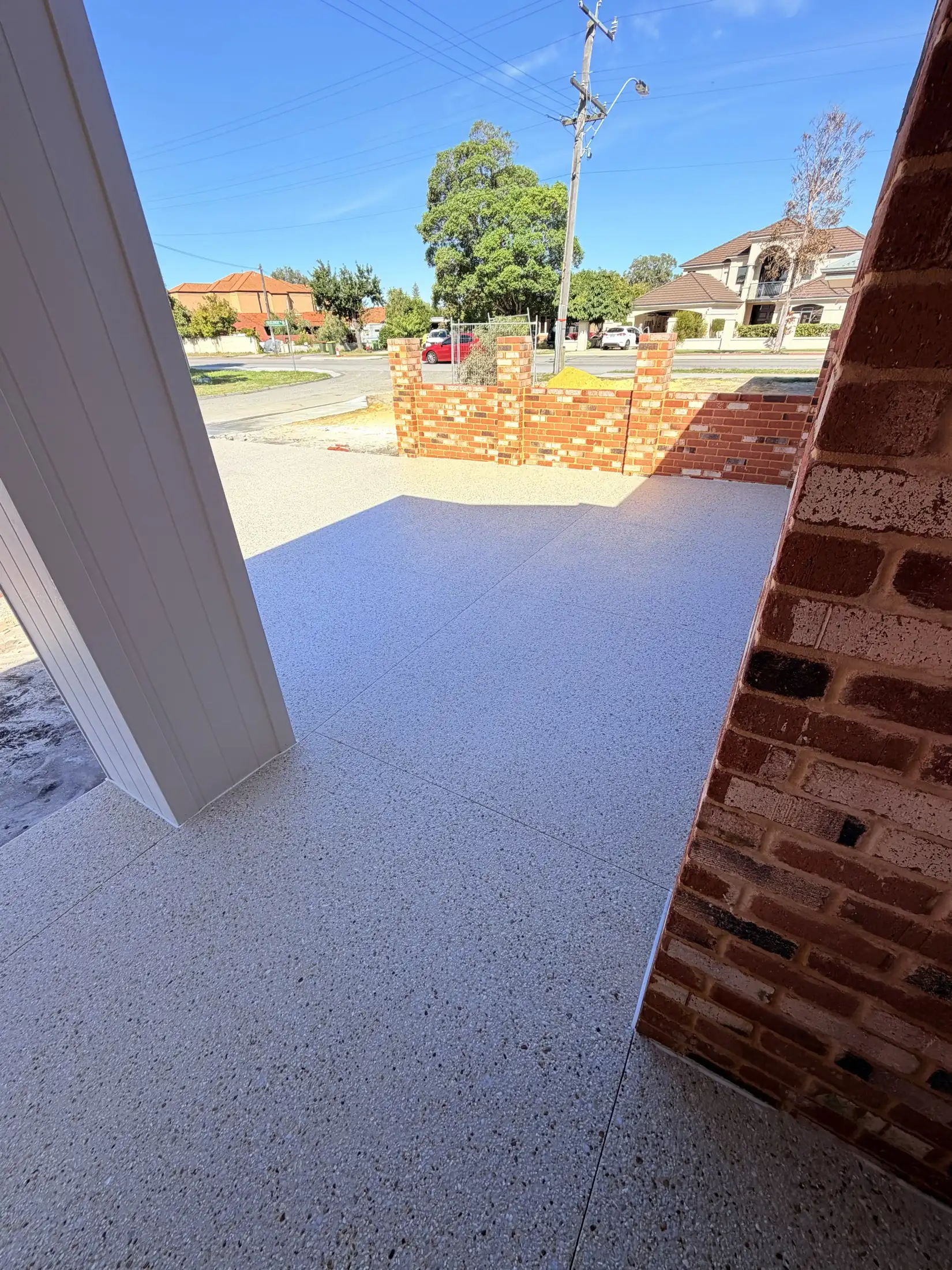
The slab is poured with decorative stone through the mix and allowed to reach the appropriate condition for grinding. Diamond tooling then removes a controlled amount of the surface to reveal the aggregate.
A lighter grind exposes less stone and leaves more of the concrete background visible. A deeper grind creates a stronger aggregate pattern. The finished surface is protected with a system selected for the location and intended use.
Honed and polished concrete are not interchangeable terms. Honed concrete is an outdoor-oriented finish with a matte to low-sheen appearance. Indoor polished concrete is progressively refined to a higher level and behaves differently in weather. The right outdoor specification balances appearance, cleaning and slip requirements rather than chasing the highest gloss.
A smooth finish is useful where people sit, walk barefoot or move furniture, but the surrounding conditions still decide whether it is the right choice.
Honed concrete creates a continuous floor without tile grout lines and can connect sliding doors, dining areas and outdoor kitchens. Levels and drainage still need to be resolved before the pour.
The smooth feel can work in selected pool surround areas, sometimes paired with a more textured wet-edge finish where extra grip is preferred.
A ground decorative finish can give sheltered entries and connected paths a clean stone character. Direct rain, slope and tracked-in contaminants should be considered before choosing the final treatment.
A honed concrete driveway can suit a suitable grade and design brief, while steep or highly exposed access may be better served by a more textured finish.
Both finishes can begin with the same family of decorative concrete mixes. Exposed aggregate is washed to reveal rounded stone at the surface, creating more pronounced texture. Honed concrete is ground so the visible stone is flat and the surface feels smoother. That difference changes comfort, grip, cleaning and how the aggregate pattern appears.
The slab design and grinding plan need to agree from the start. These are the main decision points, with timing adjusted to the mix, weather and site.
Confirm the traffic, water exposure, adjoining thresholds, falls and drainage before choosing a blend or grind depth.
Complete the excavation, base, formwork and reinforcement required for the slab, then place and finish the decorative concrete with grinding in mind.
Use diamond tooling to reveal the stone evenly and address edges and details that larger equipment cannot reach.
Apply the selected protective treatment when conditions allow, then provide the job-specific cure, use and maintenance guidance.
Honed concrete costs more than an equivalent plain slab because the decorative mix and mechanical grinding add materials, labour and specialist tooling. The final amount is influenced by the area, access, slab preparation, blend, required exposure, edge work and the number of small or interrupted zones. Grinding beside walls, steps, posts and completed landscaping can be slower than working across a simple open rectangle.
A quote should separate the core slab work from finish-specific details so you understand what changes the price. Send approximate dimensions, site photos and the intended use for an initial discussion. A site-based figure follows once access, levels and the target finish are clear.
Remove sand and grit regularly so it is not ground across the surface under shoes or furniture. Wipe spills promptly and use a pH-neutral cleaner compatible with the protective treatment. Harsh acids, unsuitable solvents and aggressive pressure washing can affect the finish or coating, so follow the care guidance supplied for the completed job.
The timing of any maintenance coat depends on exposure, foot traffic, pool chemicals, furniture movement and the original system. Watch for visible wear rather than relying on a universal calendar. If the surface becomes unusually slippery, first remove contamination and confirm whether the treatment has worn before choosing a repair product.
From Canning Vale, Only Concrete services suitable decorative concrete work across the Perth metropolitan area, commonly from Mandurah to Joondalup depending on the job scope. Tell us the suburb, the size of the area and whether it is covered, exposed, sloped or beside a pool. The Only Concrete team can then give a direct view on whether honed, exposed or a combination is appropriate.
Honed concrete is ground to reveal decorative aggregate and finished for outdoor use with a matte to low-sheen character. Polished concrete is progressively refined to a higher gloss for indoor floors. The outdoor treatment should prioritise weather exposure and practical slip requirements.
Any smooth surface can become slippery when wet or contaminated. Honed concrete may suit selected pool areas when the grade, drainage and protective treatment are appropriate, while a more textured exposed finish may be preferable at wet edges or on steeper sections.
Cost depends on area, access, base preparation, the decorative blend, grinding depth, edge work and the number of small detailed zones. It generally costs more than plain concrete because the grinding is a separate specialist process after the slab is poured.
Sometimes, but the result depends on the condition of the slab and the aggregate that was originally used. Grinding reveals what is already inside the concrete, so an existing slab cannot be assumed to produce an even decorative stone pattern without assessment.
Sweep away grit, clean spills promptly and use products compatible with the protective treatment. Avoid harsh acids and overly aggressive pressure washing. Maintenance coating intervals vary with sun, water, chemicals and traffic, so the surface condition should guide the timing.
Tell us where the concrete will sit, whether it is covered or exposed, the approximate dimensions and what usually happens in the space. Photos of thresholds, pool edges, slopes and access are especially useful because those details influence the slab, finish and grinding plan.
If you are comparing honed concrete with a washed decorative finish, say what matters most to you: comfort, grip, colour, cleaning or visual continuity. Nathan can talk through the options on 0438 319 821 between 6am and 6pm, Monday to Saturday. Once the site conditions and finish are understood, you will receive an itemised quote based on the real scope.
Prefer to talk? Call 0438 319 821